Documents Required for Abortion in Nepal: What Do You Need?
Wondering which documents are required for an abortion in Nepal? Learn about government ID rules, why parents or husbands do not need to give permission for adults 18+, unmarried women's legal rights, and on-site testing at Khushi Abortion Center in Kalanki, Kathmandu.
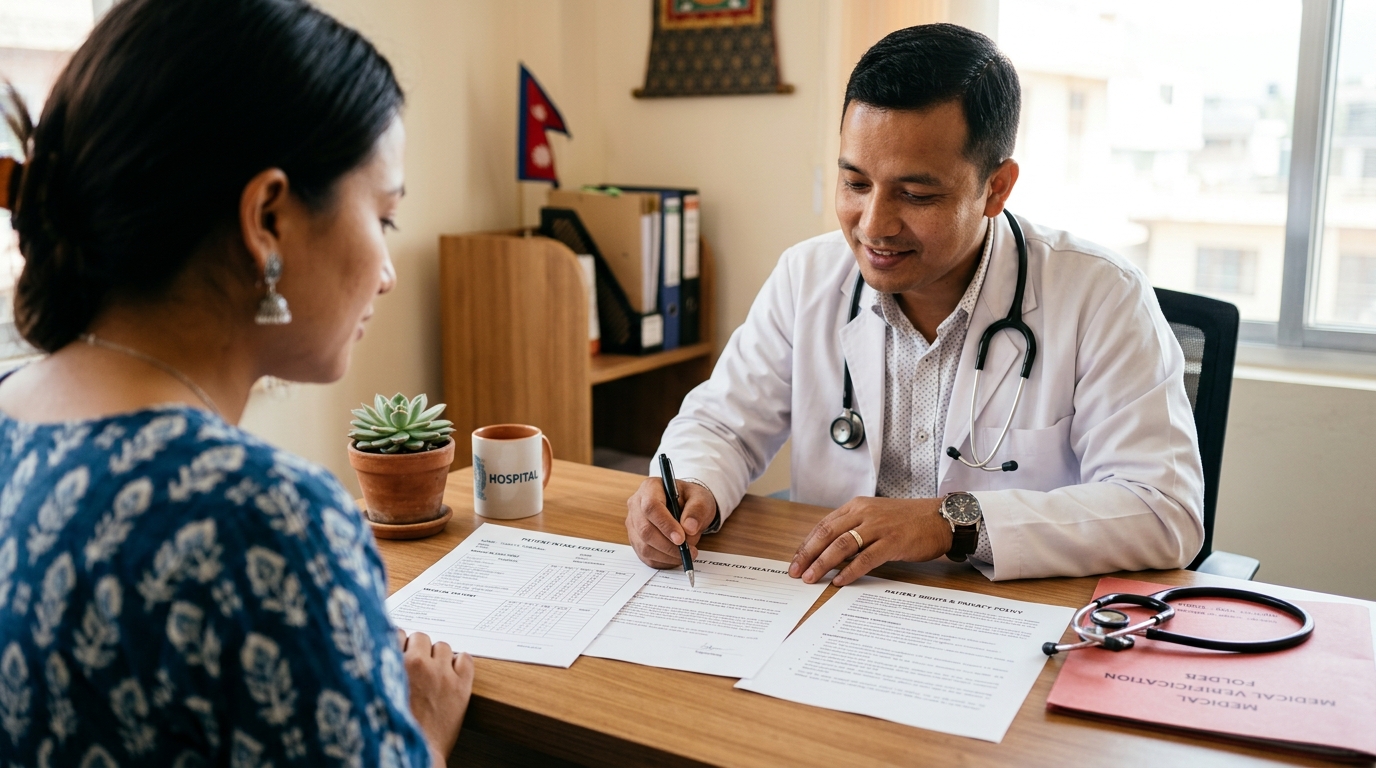
- Government ID (Citizenship, Passport, National ID, or Driving License) is the primary required document; you do not need every medical test in advance.
- The legal adult medical consent threshold in Nepal is 18 years old, NOT 20. Adult women aged 18+ make their own reproductive healthcare choices.
- Neither parents nor a husband or partner need to be present or give permission for an adult woman to receive safe abortion care.
- Unmarried women have the same full, lawful rights to safe abortion care as married women under the Safe Motherhood Act 2018.
- Khushi Abortion Center in Kalanki provides complete on-site pelvic ultrasound, blood tests, and confidential counseling during your appointment.
Wondering which documents are required for an abortion in Nepal? Learn about government ID rules, why parents or husbands do not need to give permission for adults 18+, unmarried women's legal rights, and on-site testing at Khushi Abortion Center in Kalanki, Kathmandu.
Complete Guide to Documents Required for Abortion in Nepal
If you are considering an abortion in Nepal, you may have questions about which documents are required, whether parents need to be present, and whether a husband or partner needs to give permission. At Khushi Abortion Center Nepal, we understand that many women want clear, accurate, and reassuring information before visiting a clinic.
Key legal facts under Nepal Safe Motherhood Act 2018: Any adult woman who has completed 18 years can provide her own independent consent. Neither parents nor husbands need to give permission. Government-issued ID (Citizenship, Passport, Driving License, or National ID) is the primary document required. All medical tests including pelvic ultrasound are conducted on-site at Kalanki Chowk, Kathmandu.
If you are experiencing an unintended pregnancy and want to understand your options, you do not have to make the decision based on confusing information found online. Khushi Abortion Center Nepal provides confidential reproductive healthcare services at 99 Shop Building, Kalanki Chowk, Kathmandu, including medical abortion, surgical abortion, gynecology consultation, ultrasound, laboratory services, and post-abortion care. Call or WhatsApp +977 9866950160 (Available 24/7) or email [email protected].
Frequently Asked Questions
Common clinical, legal, and privacy questions regarding safe reproductive healthcare in Nepal.
100% Confidential Healthcare Notice
Information provided in this article complies with Nepal Medical Council standards and is for educational empowerment. Individual medical decisions should always be confirmed via clinical consultation and pelvic ultrasound.
Have Personal Questions?
Speak directly with certified female doctors. No judgment, no parental or spousal consent required, 100% private.
Related Clinical & Legal Guides
Continue learning with verified medical facts from our gynecological team.
How Many Weeks Is Abortion Safe? Limits by Method
Abortion is safest the earlier it’s done. In the first 12 weeks with a trained provider, it carries very low risk, and risk rises gradually in the second trimester. This blog explains the safe time frame week by week, Nepal’s legal limits, medical vs surgical methods, who may need extra care, and what recovery looks like.
Safe Abortion Care in Nepal: Methods, Access & What to Expect
Safe abortion is legal in Nepal: up to 12 weeks by a woman’s own choice, and up to 28 weeks in special cases. It is very safe when a trained provider does it at an approved facility, using pills (up to about 9 weeks) or a short surgical procedure (MVA). Early care from a licensed provider is the best next step.
Abortion Cost in Nepal: 2026 Guide to Safe & Legal Pricing
Find out the actual abortion cost in Nepal for 2026. Compare pricing for pills and MVA procedures at certified clinics and learn about free public services.
Need Discreet, Caring Medical Assistance in Kathmandu?
Our female doctors are available 7 days a week to provide safe ultrasound scans, FDA-approved abortion pills, and 10-minute MVA suction in Kalanki.