FPAN Valley Clinic Kathmandu: Services, Address & Contact
The Family Planning Association of Nepal (FPAN) Valley Clinic is Kathmandu’s well-known branch for family planning, safe abortion and general reproductive health care. This guide covers its services, how to confirm its current details, answers to common family planning questions, and an alternative in Kalanki for those who prefer a different location.
- Medically verified safe abortion guidance under Nepal law.
- Strict patient confidentiality guaranteed.
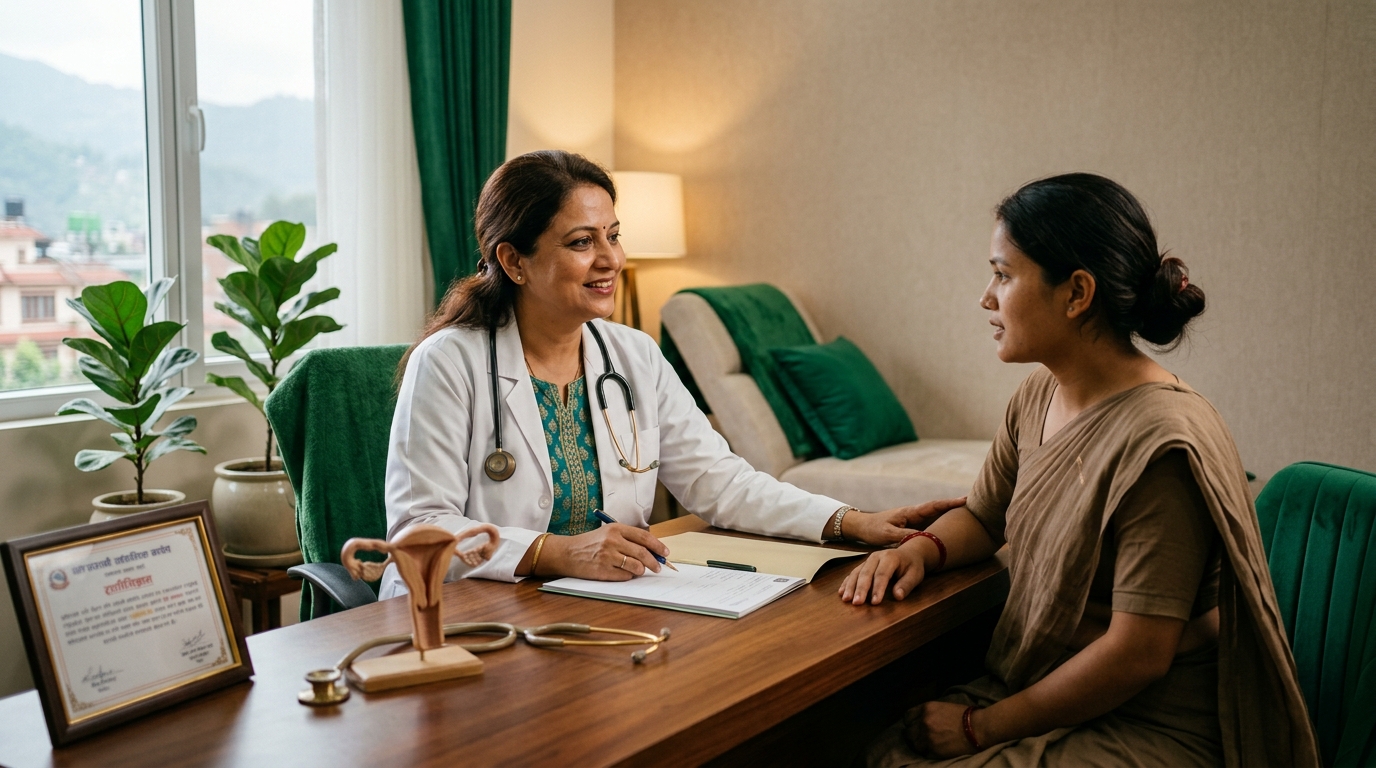
- Consult directly with senior female gynecologists.
The Family Planning Association of Nepal (FPAN) Valley Clinic is Kathmandu’s well-known branch for family planning, safe abortion and general reproductive health care. This guide covers its services, how to confirm its current details, answers to common family planning questions, and an alternative in Kalanki for those who prefer a different location.
FPAN Valley Clinic in Kathmandu: An Overview

Choosing a reproductive health clinic in Kathmandu is rarely a casual decision. People want to know what a clinic offers, how to reach it, and whether their privacy will be respected. The Family Planning Association of Nepal (FPAN) Valley Clinic is among the most frequently searched names in this space. This guide outlines what the clinic is, the services it provides, how to find its current details, and an alternative for those who prefer a different location. It also answers the questions people ask most often about family planning and safe abortion in Nepal.
What Is the Family Planning Association of Nepal (FPAN) Valley Clinic?
The Family Planning Association of Nepal was founded in 1959 and is the country’s first national organisation dedicated to sexual and reproductive health. It is a member of the International Planned Parenthood Federation (IPPF) and has built a network of clinics across many districts. For several generations of Nepali families, FPAN was the first source of reliable information on contraception.
The Valley clinic serves as its Kathmandu branch. Because addresses, opening hours and phone numbers are revised from time to time, the most dependable source is FPAN’s own Kathmandu branch listing. Calling ahead before you travel is also sensible.
Services at the Family Planning Association of Nepal (FPAN) Valley Clinic
According to FPAN’s published information, the clinic covers a broad range of reproductive and general health care:
-
Family planning: pills, injections, condoms, implants and IUDs, along with permanent methods such as vasectomy and minilap
-
Safe abortion and post-abortion care
-
Gynaecology and fertility consultations
-
Antenatal and postnatal care
-
Cervical cancer screening, STI testing and treatment
-
Laboratory tests and counselling, including support for survivors of gender-based violence
Availability can differ from one day to the next, so it is worth confirming that the service you need is offered before your visit.
Where Can I Find Safe Abortion Services in Nepal?
Abortion has been legal in Nepal since 2002 and is now governed by the Safe Motherhood and Reproductive Health Rights Act of 2018. An adult woman may choose to end a pregnancy at her own request up to 12 weeks, and no consent from a husband, partner or parent is required. Beyond 12 weeks, it is permitted only in defined circumstances, such as a risk to the woman’s health, rape, incest or serious fetal abnormality.
The setting matters as much as the law. Choose a licensed clinic with qualified doctors, and avoid pills bought over the counter or online without a prescription. The pregnancy must first be dated by a clinician, and conditions such as ectopic pregnancy have to be ruled out. Neither can be judged safely at home.
An Alternative in Kathmandu: Khushi Abortion Center, Kalanki
For those who would rather visit a clinic on the western side of Kathmandu, Khushi Abortion Center in Kalanki is a government-approved option. It operates independently of FPAN.
-
Address: 99 Shop Building, Kalanki Chowk (on the way to Thankot), Kathmandu
-
Walk-in hours: Sunday to Saturday, 7:00 AM to 7:00 PM
-
Helpline and WhatsApp: +977 9866950160, available 24/7
The clinic provides safe abortion services in private consultation rooms with female gynaecologists. Patients are welcome to use an alias, and records are not shared with third parties.
If you need help finding the clinic, directions are available online, and the team can also guide you by phone.
Anyone concerned about privacy can review the clinic’s patient rights before booking.
Common Family Planning Questions, Answered
The answers below are general information and not a substitute for personal medical advice.
When was FPAN established in Nepal?
FPAN was established in 1959. It joined IPPF in 1960 and became a full member association in 1969.
What is the most commonly used family planning method in Nepal?
This shifts over time, so a fixed figure can quickly become outdated. The latest Nepal Demographic and Health Survey is the most reliable reference. Injectables, pills, condoms, implants, IUDs and sterilisation are all in regular use.
What is family planning in Nepali?
It is called परिवार नियोजन (pariwar niyojan), meaning the decision of whether and when to have children, and how far apart.
Is family planning 100% safe?
No method is perfectly suited to everyone. Most are very safe, but personal health history and side effects should be discussed with a doctor. Condoms are the only common method that also reduces the risk of sexually transmitted infections.
What are 5 methods of family planning?
Condoms, oral contraceptive pills, injectables, implants and IUDs are five widely used methods. Sterilisation is also available and is permanent.
What are the 12 types of family planning?
Sources count them differently, but they fall into four groups. Short-acting methods include pills, the patch, the vaginal ring, injections, condoms and the diaphragm. Long-acting methods are the implant and the IUD. Natural methods include fertility awareness, withdrawal and lactational amenorrhea. The permanent group covers male and female sterilisation. The WHO fact sheet on family planning sets these out clearly.
Which family planning method is for 2 months?
Injectables protect for roughly two to three months depending on the type. Depo-Provera, the most commonly used, is normally given every three months. Ask your clinic which interval it offers.
Which family planning method is the best?
There is no single best option. The right choice depends on age, health, the length of protection needed and future plans for children. Implants and IUDs are among the most effective reversible methods, and a clinician can help you compare them. Details on available family planning options can help you prepare.
Which method is permanent in females?
Tubal ligation, commonly performed in Nepal as a minilap operation. The male equivalent is vasectomy.
What are the top 3 birth control methods?
In terms of effectiveness, the implant, the IUD and sterilisation lead the list. In terms of how widely they are used, the answer varies by country and age group.
Preparing for Your First Visit
A little preparation makes any clinic visit smoother. Confirm opening hours by phone, and note the first day of your last menstrual period, since it helps the doctor estimate the stage of pregnancy. Write down your questions in advance so nothing is forgotten during the consultation. If you feel anxious, say so; experienced staff will take the time to explain each step.
It also helps to know what paperwork may be needed. A short guide on the documents required for abortion in Nepal covers this in detail.
Final Thoughts
The Family Planning Association of Nepal (FPAN) Valley Clinic remains a well-known choice in Kathmandu for family planning, safe abortion and general reproductive health care. Whichever clinic you select, confirm that it is licensed, ask questions freely, and take the time you need, because the decision is yours. If Kalanki is easier for you to reach, Khushi Abortion Center can be contacted at any hour on +977 9866950160
For confidential assistance or same-day appointments, contact Khushi Abortion Center in Kalanki, Kathmandu.
Frequently Asked Questions
Common clinical, legal, and privacy questions regarding safe reproductive healthcare in Nepal.
100% Confidential Healthcare Notice
Information provided in this article complies with Nepal Medical Council standards and is for educational empowerment. Individual medical decisions should always be confirmed via clinical consultation and pelvic ultrasound.
Have Personal Questions?
Speak directly with certified female doctors. No judgment, no parental or spousal consent required, 100% private.
Related Clinical & Legal Guides
Continue learning with verified medical facts from our gynecological team.
How Safe Are Abortions? Risks, Facts & Recovery
Abortion is very safe when it’s done early, with a method that suits the stage of pregnancy, and by a trained provider. The real danger comes from unsafe abortion, not the procedure itself. This blog covers the risks, medical vs surgical methods, recovery, and when to see a doctor, so you can make an informed decision.
How Many Weeks Is Abortion Safe? Limits by Method
Abortion is safest the earlier it’s done. In the first 12 weeks with a trained provider, it carries very low risk, and risk rises gradually in the second trimester. This blog explains the safe time frame week by week, Nepal’s legal limits, medical vs surgical methods, who may need extra care, and what recovery looks like.
Safe Abortion Care in Nepal: Methods, Access & What to Expect
Safe abortion is legal in Nepal: up to 12 weeks by a woman’s own choice, and up to 28 weeks in special cases. It is very safe when a trained provider does it at an approved facility, using pills (up to about 9 weeks) or a short surgical procedure (MVA). Early care from a licensed provider is the best next step.
Need Discreet, Caring Medical Assistance in Kathmandu?
Our female doctors are available 7 days a week to provide safe ultrasound scans, FDA-approved abortion pills, and 10-minute MVA suction in Kalanki.