Medical Abortion in Nepal: What to Expect, Day by Day
Medical abortion in Nepal is legal up to 12 weeks and uses two medicines: mifepristone on Day 1 and misoprostol on Day 2. Expect strong cramps and heavy bleeding, and go to a health facility at once if you soak two pads in 30 minutes or have a fever that does not settle. A follow-up on Day 14 confirms it worked, and government hospitals provide the service free of charge.
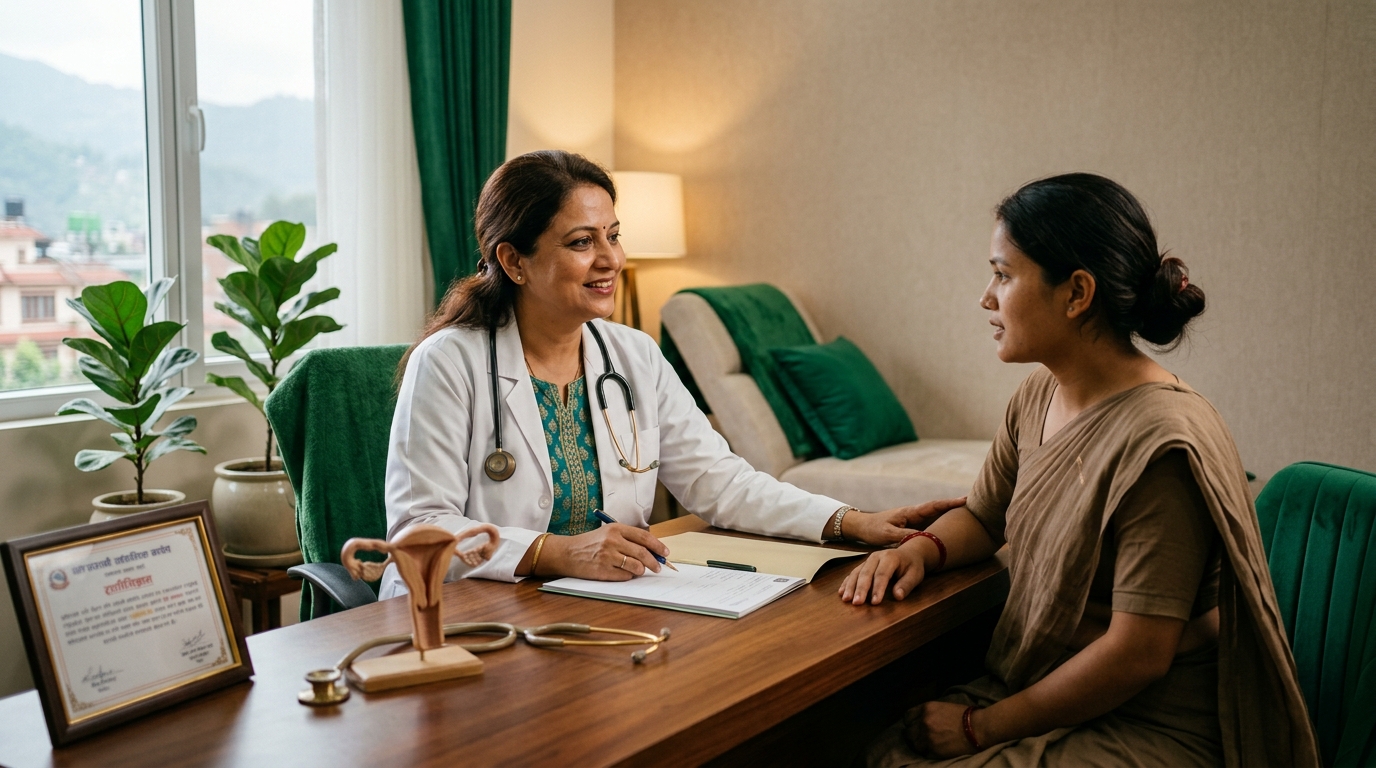
- Medically verified safe abortion guidance under Nepal law.
- Strict patient confidentiality guaranteed.
- Consult directly with senior female gynecologists.
Medical abortion in Nepal is legal up to 12 weeks and uses two medicines: mifepristone on Day 1 and misoprostol on Day 2. Expect strong cramps and heavy bleeding, and go to a health facility at once if you soak two pads in 30 minutes or have a fever that does not settle. A follow-up on Day 14 confirms it worked, and government hospitals provide the service free of charge.
What Is Medical Abortion in Nepal?

What Is Medical Abortion in Nepal?
Medical abortion in Nepal showing Day 1, Day 2 and Day 14 follow-up.
Most of the questions people ask about medical abortion in Nepal have little to do with the tablets themselves. They are about everything around them. How many visits are there? What will the pain actually be like? How much bleeding is too much? And how do you know, afterwards, that it has worked?
This post follows the process in the order it happens: the consultation, Day 1, Day 2 and the check-up on Day 14. It draws on the same sequence used in the Safe Abortion Service pamphlets given out at health facilities across the country. Use it as background, and treat your health worker's instructions as the final word.
The short version
If you only have a minute, here is what matters.
- Abortion is legal in Nepal, and you can request it yourself up to 12 weeks of pregnancy.
- Medical abortion uses two medicines: one mifepristone tablet, then four misoprostol tablets 24 to 48 hours later.
- Strong cramps and heavy bleeding are expected. Soaking two pads in 30 minutes, or a fever that does not settle, means going to a health facility at once.
- A follow-up visit around Day 14 confirms that everything has passed.
- Government hospitals provide abortion care free of charge, while private clinics set their own fees.
Is it legal?
Yes. Nepal legalised abortion in 2002, and the right was strengthened by the Safe Motherhood and Reproductive Health Rights Act of 2018. The law allows abortion up to 12 weeks at the woman's request, up to 18 weeks after rape or incest, and at any stage when the pregnancy threatens her life or health. Pills have been offered through registered providers since 2009. For the full legal picture, see whether abortion is legal in Nepal.
How the pills work
The standard regimen across approved services is mifepristone and misoprostol, and it is the combination the World Health Organization recommends too.
Mifepristone comes first. It blocks progesterone, the hormone a pregnancy depends on, so the pregnancy stops developing. Misoprostol follows and makes the womb contract, which pushes the pregnancy tissue out. That second step is the one you feel.
Abortion pills in Nepal are often sold as a combined pack: one mifepristone tablet and four misoprostol tablets, just as the pamphlet shows.
Medical abortion in Nepal, step by step
The consultation
Before any tablet, you meet a trained provider. They ask about your last period, confirm how far along you are, go through your medical history and explain the process. This is your chance to ask whatever has been on your mind.
It is also the safety check. If your dates are uncertain, if you have an IUD in place, or if you have pain on one side that could suggest a pregnancy outside the womb, the provider may suggest a scan or a different method, such as surgical abortion. Skipping this step is the single biggest reason people run into trouble with pills bought on their own.
Day 1: mifepristone
On the first day you swallow one mifepristone tablet with water, with a health worker present. Most women feel little or nothing afterwards. Some notice light bleeding, mild cramps or nausea.
One instruction from the pamphlet is worth remembering. If you vomit within 30 minutes of taking the tablet, tell your health worker straight away, since the dose may need to be repeated.
You then go home with the second set of tablets and clear directions on when to take them.
Day 2: misoprostol
About 24 to 48 hours after the first tablet, you take four misoprostol tablets. This is the step that starts the abortion itself, so choose a private, comfortable place, keep pads and water within reach, and have someone you trust nearby.
How to take abortion pills on Day 2
The pamphlet describes two methods. Your provider will tell you which one suits you.
Under the tongue. Place all four tablets under your tongue and let them dissolve for 30 minutes. Avoid talking, eating or drinking while they do. When the half hour is up, drink water to wash down any remaining fragments.
In the vagina. Wash your hands, lie down, and place the four tablets one at a time deep inside the vagina. Stay lying down for 30 minutes while they dissolve.
Both methods work. If you are unsure which to use, ask before you leave the clinic rather than at home in the evening.
What to expect once the tablets start working
Cramping usually begins within 30 to 60 minutes of the Day 2 tablets. Most women describe it as strong period pain, and some find it stronger. Bleeding follows, heavier than a normal period and often with clots. Nausea, vomiting, diarrhoea, chills, a mild fever and headache are all common and settle on their own.
For most women the worst passes within a few hours. Drink plenty of fluids, rest, and use the pain relief your health worker recommended. For more on this, read about the side effects and what counts as normal.
How to know the abortion worked
Most women pass the pregnancy within four to six hours of the second dose. Strong cramping, bleeding with clots, and then a gradual easing is the pattern you are looking for. A smaller number need up to five days.
After that, bleeding keeps getting lighter, although light spotting can last up to about two weeks and may stop and start. Use sanitary pads, not cloth or tampons, so you can judge how much you are losing.
One caution. If you had almost no bleeding after the Day 2 tablets, do not assume it worked. Contact your health worker, because that can mean the pregnancy is still there.
Warning signs
Complications are uncommon when a trained provider is involved, but you should know the signs. Go to a health facility or call your provider immediately if:
- you soak two pads completely within 30 minutes,
- you have a high fever (100.4°F or above) lasting two hours or more,
- you feel faint or very weak, or the pain is severe and does not ease.
If you are unsure whether something counts, go anyway. No one will think you are overreacting. Many approved providers run an aftercare line, and Marie Stopes Nepal has a toll-free number, 1143.
The follow-up visit on Day 14
About two weeks after you began, you return to your health worker. They confirm the abortion is complete, check how you are recovering, and talk through contraception.
Plenty of people skip this visit because they feel fine. I would urge you not to. Feeling well is encouraging, but the check is the only way to be certain, and anything left behind is simple to treat when it is found early.
Contraception afterwards
You can become pregnant again very soon after an abortion, sometimes before your next period. If you do not want that, start a method early. Almost every option can begin on the day you take the first tablet, including the implant, the Depo injection, the IUD and the regular pill. Condoms add protection against HIV and other infections. Emergency contraception works within 120 hours of unprotected sex. The full options are covered in contraception after abortion.
Final thoughts
If you are reading this because you or someone close to you is facing the decision, I hope it feels a little less uncertain now. A medical abortion is short, well understood and, with a trained provider, safe. In Nepal it is also legal and available through public health services.
Go early, ask every question you have, and keep the follow-up appointment. And give yourself some kindness afterwards.
This post is general information, not medical advice. If you are pregnant and deciding what to do, speak with a trained health worker at an approved safe abortion service.
For confidential assistance or same-day appointments, contact Khushi Abortion Center in Kalanki, Kathmandu.
Frequently Asked Questions
Common clinical, legal, and privacy questions regarding safe reproductive healthcare in Nepal.
100% Confidential Healthcare Notice
Information provided in this article complies with Nepal Medical Council standards and is for educational empowerment. Individual medical decisions should always be confirmed via clinical consultation and pelvic ultrasound.
Have Personal Questions?
Speak directly with certified female doctors. No judgment, no parental or spousal consent required, 100% private.
Related Clinical & Legal Guides
Continue learning with verified medical facts from our gynecological team.
How to Do a Pregnancy Test at Home: Urine and Blood Tests
Learn how to do a pregnancy test at home with a urine kit and read your result correctly. Understand how blood tests work and when to test for the most accurate answer. Know what to do next if your result is positive, negative or unclear.
FPAN Valley Clinic Kathmandu: Services, Address & Contact
The Family Planning Association of Nepal (FPAN) Valley Clinic is Kathmandu’s well-known branch for family planning, safe abortion and general reproductive health care. This guide covers its services, how to confirm its current details, answers to common family planning questions, and an alternative in Kalanki for those who prefer a different location.
How Safe Are Abortions? Risks, Facts & Recovery
Abortion is very safe when it’s done early, with a method that suits the stage of pregnancy, and by a trained provider. The real danger comes from unsafe abortion, not the procedure itself. This blog covers the risks, medical vs surgical methods, recovery, and when to see a doctor, so you can make an informed decision.
Need Discreet, Caring Medical Assistance in Kathmandu?
Our female doctors are available 7 days a week to provide safe ultrasound scans, FDA-approved abortion pills, and 10-minute MVA suction in Kalanki.